
A gastrina é um hormônio que excita o receptor CCK2R acoplado à proteína G e desempenha um papel na secreção de ácido gástrico. A gastrina grande é adequada para farmácia e biologia celular. O produto também é um fator de crescimento potencial para alguns tumores cancerígenos, incluindo o câncer de próstata. CAS:60675-77-6 | Sequência de gastrina I humana Big Gastrina I (péptido 34, amidação C-terminal, bloqueio de ácido piroglutâmico N-terminal): Pyr-LGPQGPPHLVADPSKKQGPWLEEEEEAYGWMDF-NH, peso molecular 3849,20; O subtipo de gastrina de cadeia longa secretado pelas células G gástricas, a sequência peptídica C-terminal 5 é CCK2R (o CCK-B é principalmente o fragmento ativo como receptor), e a sequência longa N-terminal é principalmente para melhorar a confiabilidade do corpo.
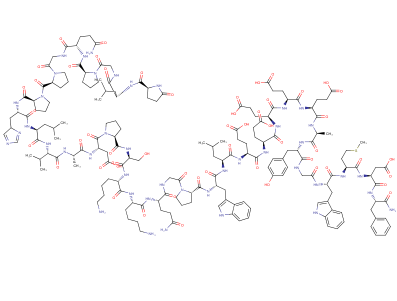
1. key role principle
the target CCK2RR(CCK-B receptor, Gq-type G protein-coupled receptor) is commonly expressed in gastric ECL enterochromaffin-like cells, parietal cells, and some cancer cells. Big Gastrin I fuses CCK2R postexcitation Gq-PLC channel to enhance IP3 and Ca², and excite PKC in cells; Priority is given to gastric ECL cells to promote the release of histamine, histamine fuses parietal cell H₂ receptor, indirectly excite H/K-ATPase, and promotes gastric acid secretion; C- terminal amidated pentapeptide fragment (GWMDF-NH) is an important structure for receptor binding; the N-terminal long peptide segment does not participate in receptor binding, but resists protease hydrolysis, and its half-life is significantly good at small gastrin G-17; CCK2R can mediate downstream MAPK and PI3K signals, adjust cell proliferation, anti-apoptosis, and achieve self-metabolism in cancer cells.
The main role of 2. in the regulation of gastric acid secretion
stimulate gastric acid secretion adjustment: ECL cells release histamine, indirectly promote the parietal cells secrete gastric acid and pepsinogen; adjust the growth of gastric mucosa and maintain the stability of gastric mucosa epithelium. Gastrointestinal motility and digestive glands: promote gastric smooth muscle contraction; Slight stimulation of pancreatic exocrine secretion, promote biliary drainage.
Cell proliferation and tumor biology: promote growth factor CCK2R positive tumor (gastric cancer, gastric cancer, colorectal cancer, prostate cancer) cell proliferation, erosion, anti apoptosis; promote tumor angiogenesis.
Mucosal repair: promote gastric mucosal epithelial cells in physiological concentrations of reproduction, to participate in the repair of gastric mucosal injury.
3. restricted receptors are widely distributed and have strong side effects: CCK2R is reflected in stomach, central and various tumors; systemic administration is easy to cause high gastric juice, gastric erosion and ulceration, and long-term stimulation will induce gastric cancer.
Disadvantages of peptide drug generation: although compared with short chain, short chain drug generation has disadvantages: G17 has high reliability, but it is still easy to be dissolved by peptidase; Oral administration is completely inactive and only injected. Can't penetrate the blood-brain barrier. Subtype effect difference: Bigg Gastrin I receptor infection in vivo is weaker than that of G17 at the same molar concentration, the activity of small gastrin secretagogue is lower, and the physiological effect is long-term and soft. Conversion risk: It has the activity of promoting tumor reproduction and cannot be directly developed into therapeutic drugs; it is only used as a research tool peptide and tumor targeted imaging/target certification tool. Population differences: human and rodent CCK2R different infectivity, clinical trial conclusions can not directly promote the body.
4. synthesis method
Fmocc solid phase polypeptide synthesis (SPPS) is popular to select solid phase carrier Rink amide resin to complete C- terminal Phe amidation. Amino acids are assembled from the C terminal to the N terminal successively. N finally, pyroglutamic acid is introduced into the terminal (Pyr/pGlu) to seal the N terminal. The sequence contains Trp and Met. The whole process strictly controls oxidation to avoid tryptophan oxidation and methionine sulfoxide residue. TFA cracking resin, remove all side chain maintenance groups; preparation of reversed phase; HPLC purification, desalting, freeze-drying, white polypeptide powder; quality management: analysis: analysis of HPLC purity, ESI-MS content certification, amino acid composition analysis, endotoxin detection. Candidate: Recombinant expression. Build gastrin precursor protein medium, prokaryotic expression, protease cleavage in vitro amide decoration.
Post time: 2026-09-29